Dog and Bone Maze: A Practical Embroidery Review
As a designer who’s stitched hundreds of custom pieces—from boutique baby onesies to Etsy best-selling tote bags—I opened Dog and Bone Maze expecting charm, but what stood out immediately was its quiet versatility. It’s not flashy. It doesn’t scream for attention. Instead, it invites slow looking—like tracing the path of a gentle maze with your eyes before even threading a needle. That’s rare in kids’-themed embroidery files, especially those rooted in the Coloring Pages Kids category. This isn’t just a coloring sheet converted to stitch; it’s a design that *breathes* as embroidery.
First Impressions: Simplicity with Purpose
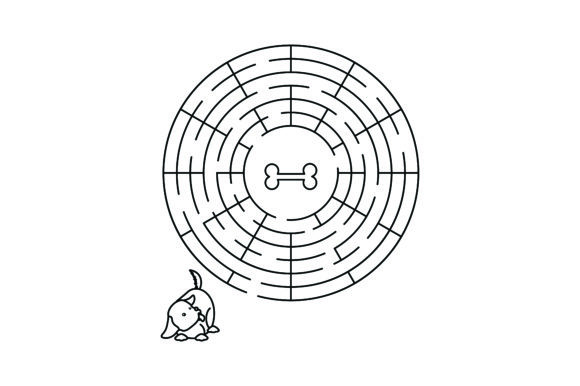
The layout is clean and centered—a friendly dog silhouette winding through a playful bone-shaped maze. No extra flourishes, no crowded borders, no tiny disconnected elements begging for lost stitches. The lines are confident but not rigid, with subtle curves that suggest movement rather than static geometry. That matters. When you’re stitching on a curved surface like a cap or a pillow cover, stiff angles fight back. These soft transitions flow with fabric drape. As an embroidery designer, I immediately saw how well Dog and Bone Maze would translate to satin stitch outlines and light fill-stitch interiors—no dense fills that could stiffen a baby onesie or overwhelm a tea towel.
A Real-World Test: Stitching It on a Linen Tote Bag
Last week, I prepped a batch of natural linen tote bags for a local craft fair—simple, earthy, meant for moms who love understated handmade goods. I chose Dog and Bone Maze for the front pocket because it struck the right balance: recognizable enough for dog lovers, clever enough to spark conversation, and restrained enough not to clash with the bag’s texture. After hooping with medium-weight cutaway stabilizer (linen shifts!), I ran the design in a warm tan thread on off-white linen. The result? Crisp lines, no puckering, and zero detail loss—even in the narrowest maze corridors. Customers didn’t just say “cute.” They paused. Traced the path with their fingers. Asked, “Is it *meant* to be solved?” That kind of engagement is gold for a small shop product or personalized gift.
Where It Shines—and Where to Pause
Dog and Bone Maze works beautifully on:
- Custom apparel: Sweatshirts, crewneck tees, and aprons—especially when placed on chest or sleeve where scale feels intentional, not oversized.
- Baby embroidery: On cotton knit onesies or muslin swaddle blankets, its open layout avoids bulk and stays soft after washing.
- Embroidered patch: Clean edges mean easy cutting and clean backing—ideal for iron-on or sew-on patches sold as craft business add-ons.
- Holiday embroidery: Think dog-themed Christmas stockings or Easter egg towels—whimsical but not cutesy, timeless over trend-driven.
- Printable mockups: The SVG and transparent PNG formats make it simple to drop into digital previews for Etsy listings or social media promos.
But here’s where practical judgment kicks in:
- Small hoop sizes: While the design fits comfortably in a 4×4 hoop, avoid cramming it into anything smaller—the maze details need breathing room.
- Textured or stretchy fabric: On terry cloth towels or jersey knits, use tear-away + cutaway combo stabilizer and reduce stitch density if your machine allows. Those fine interior lines won’t forgive skipped stitches.
- Dark fabric: The design relies on line clarity more than contrast-heavy fills, so test thread color carefully—cream or heather gray often reads warmer and more cohesive than stark white.
- Curved surfaces (caps, hats): Avoid placing the full maze across the crown seam. Center it on the front panel instead—let the dog’s head sit cleanly above the bill.
What It Adds to Your Finished Product
This isn’t just another machine embroidery design. It elevates perception. On a handmade product, Dog and Bone Maze signals thoughtfulness—not just “I embroidered a dog,” but “I chose something with personality and purpose.” That builds customer trust, especially for Etsy sellers or boutique owners curating a consistent brand voice. It also boosts giftability: parents love subtle, meaningful designs for baby embroidery; pet lovers appreciate the nod to companionship without cliché. And because it’s not overly detailed or dense, it stitches reliably across machines—fewer restarts, less thread breakage, smoother production for commercial embroidery or craft fair prep.
Designer Notes You’ll Actually Use
Before you load Dog and Bone Maze into your software or list it as a digital embroidery file:
- Test on scrap fabric first—especially if using textured or dark material. See how the maze paths hold up at actual stitch size.
- Check thread color contrast in both natural and artificial light. A thread that pops in daylight may disappear under store lighting.
- Review stitch density in your embroidery software. If it’s heavy on fill stitch, consider simplifying interior areas to running stitch for breathability.
- Confirm hoop size compatibility—the design comes in SVG, transparent PNG, EPS, and DXF, but verify your machine’s native format support before purchase.
- Inspect small details at 200% zoom. Are the narrowest maze segments at least 0.5mm wide? If not, they may vanish in satin stitch.
- Try black-and-white mockups—this design’s strength lies in shape and rhythm, not color. If it reads clearly in grayscale, you’re golden.
- Use proper stabilizer—lightweight fabrics need more support than you think. Don’t skip it for baby embroidery or sweatshirt embroidery.
- Confirm licensing before selling finished items or bundling the file in craft kits. Since it’s listed under Crafts, clarify usage rights directly with the seller.
In short: Dog and Bone Maze earns its place in your design assets not because it’s complicated, but because it’s considered. It’s the kind of embroidery file that makes your tote bag feel intentional, your baby onesie feel special, and your Etsy listing stand out—not with noise, but with quiet, confident craft.