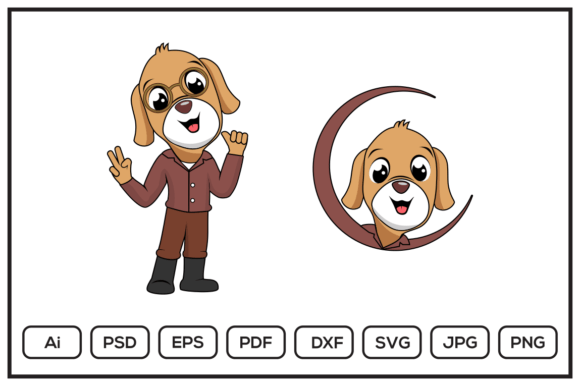
Dog Cartoon Character Design
First Impressions: Friendly, Flexible, and Ready for Real Fabric
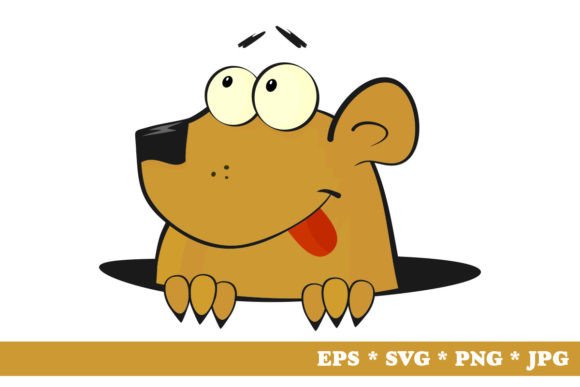
When I opened the Dog Cartoon Character Design, my first thought wasn’t “cute”—it was “workable.” That’s rare. So many cartoon dog illustrations lean too hard into whimsy or clutter, but this one balances simplicity and personality. The lines are clean, the proportions generous, and the expression reads clearly even at small scale—no squinting required. It feels like a character you’d want to stitch on a baby onesie or embroider onto a linen tea towel for a dog-loving friend. It’s not overly detailed, which is exactly what makes it strong for embroidery: no tiny eyes to vanish in satin stitch, no fragile limbs that’ll fray after three washes.
A Real Project Test: Custom Embroidered Tote Bags for a Local Pet Boutique
Last week, I used the Dog Cartoon Character Design as the centerpiece for a set of canvas tote bags for a small pet boutique launching their summer collection. We stitched it front-and-center on natural cotton canvas—medium weight, lightly textured. With proper tear-away stabilizer and medium-density fill stitches, the design held its shape beautifully. The rounded ears and friendly snout translated cleanly; customers commented on how “recognizable” and “warm” it felt—not generic, not stiff. That matters. When your handmade product carries emotional resonance, people pay more, share it, and remember your shop.
Where It Shines (and Where to Pause)
The Dog Cartoon Character Design excels in applications where clarity and charm matter most:
- Custom apparel: Works well on sweatshirt embroidery and toddler tees—its bold silhouette avoids thread nesting in knit fabric.
- Embroidered patch: Clean edges mean crisp cutting and easy backing. Ideal for scout badges, denim jackets, or craft fair pins.
- Baby embroidery: Soft curves and open shapes reduce bulk—perfect for onesies, burp cloths, and nursery pillow covers.
- Holiday embroidery: Pair it with simple red/green thread for dog-themed stockings or tree ornaments—it reads instantly, even at 3 inches tall.
- Etsy seller & small shop product: As a digital embroidery file, it’s versatile enough for multiple listings—tote bag design, apron motif, cap front, kitchen towel accent—all from one cohesive asset.
But be thoughtful in these cases:
- Small hoop sizes (<5" diameter): The full character may need slight simplification—trimming inner details or widening stroke weights helps.
- Stretchy fabric (like jersey or ribbed knits): Use cut-away stabilizer and test stitch density—too much fill can cause puckering around the muzzle and paws.
- Dark fabric: Run a black-and-white mockup first. Some lighter interior elements may need subtle re-threading or background fill to stay visible.
- Curved surfaces (caps, mugs, curved pillow seams): Avoid placing fine details—like whiskers or collar stitching—directly over high-curve zones unless you’re confident in your hooping technique.
Design Assets That Support Your Craft Business
This isn’t just an illustration—it’s a functional piece of design infrastructure. Because it’s delivered as vector files with 100 editable elements, you’re not locked in. Need to resize the dog for a keychain vs. a blanket? Done. Want to swap the collar color for a client’s brand palette? Easy. Planning to layer it into a larger applique design? Each element opens and resizes without pixelation. That flexibility directly supports your workflow as an embroidery designer, Etsy seller, or small shop owner who juggles custom requests and seasonal collections.
What Customers Actually Notice (and Why It Matters)
People don’t buy embroidery—they buy feeling. A well-executed Dog Cartoon Character Design says “thoughtful,” “handmade with care,” and “this was made for *me*.” On personalized gifts, that perception boosts perceived value. On boutique merchandise, it reinforces brand consistency. And on digital embroidery files sold to other makers, it builds trust—because buyers know they’re getting something that stitches cleanly, not just looks good on screen.
Practical Embroidery Designer Notes
Before committing to production, here’s what I always do—and recommend you do—with the Dog Cartoon Character Design:
- Test it on scrap fabric matching your final project (canvas, fleece, cotton poplin, etc.).
- Check thread color contrast—especially if using light thread on dark fabric or vice versa.
- Review stitch density in the body and head areas. Too dense = stiffness; too sparse = gaps.
- Confirm your hoop size accommodates the design comfortably—don’t force it into a tight frame.
- Inspect small details (nose curve, ear tip, paw outline) at actual stitch-out size—some vectors look fine on screen but collapse when stitched.
- Run a printable mockup in grayscale to assess balance and hierarchy—does the dog read as the focal point?
- Use appropriate stabilizer: tear-away for stable wovens, cut-away for knits or lightweight fabrics.
- Verify licensing terms before selling finished products or bundling the design into digital embroidery kits—commercial use isn’t automatic just because it’s labeled “Graphics.”
Final Thought: A Design That Serves the Maker First
The Dog Cartoon Character Design doesn’t shout. It invites. It adapts. It holds up under needle and time. Whether you’re stitching a single holiday gift or scaling up for a craft fair line of embroidered aprons, it behaves like a reliable collaborator—not a decorative distraction. That’s the hallmark of smart Illustrations built for real-world making. If you’re choosing between dozens of dog motifs online, let this one earn its place not by being the flashiest, but by being the one that stitches true, sells well, and keeps your customers smiling long after the hoop comes off.