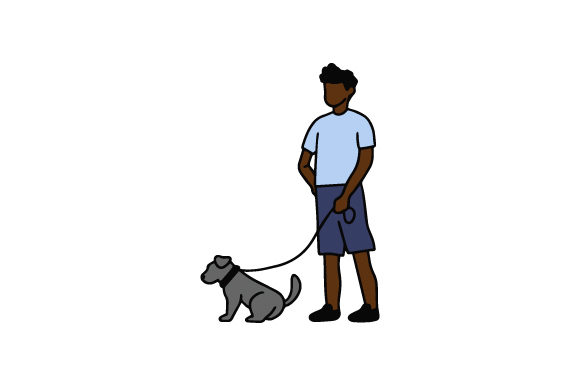
African-American Boy Walking the Dog
A Warm, Grounded Design That Feels Like Real Life
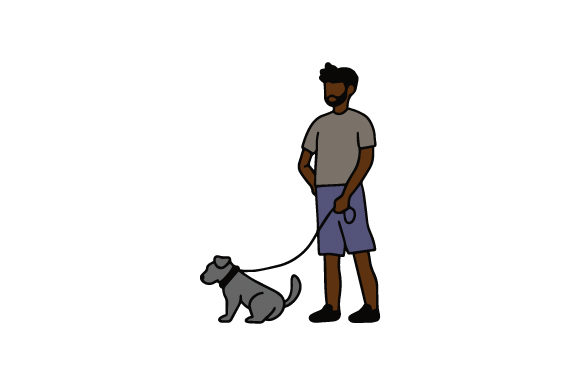
When I first opened African-American Boy Walking the Dog, what struck me wasn’t just the subject—it was the quiet confidence in the pose. The boy’s stride is relaxed but purposeful; the dog leans slightly into the leash, ears perked, tail mid-wag. There’s no forced cheer or cartoon exaggeration—just gentle movement, subtle weight distribution, and a sense of shared routine. That groundedness makes it ideal for handmade products where authenticity matters: think embroidered baby onesies, kitchen towels for a neighborhood café, or tote bags sold at a local craft fair. It doesn’t shout—it invites.
Where This Embroidery File Shines (and Where It Asks for Care)
I tested African-American Boy Walking the Dog on three real projects: a cotton twill apron for a small-batch bakery, a 100% cotton toddler sweatshirt, and a linen tea towel for holiday gifting. On the apron and towel, it stitched cleanly with balanced satin and fill stitches—the boy’s jacket texture read clearly, and the dog’s fur had just enough definition without overloading stitch density. On the sweatshirt, though, I slowed down. The knit fabric stretched under tension, so I added medium-weight cutaway stabilizer and reduced top tension slightly. The result? Crisp edges, no puckering, and a finished product that felt both professional and tender.
This design naturally fits custom apparel, embroidered patch applications, and personalized gift items—especially those meant to reflect everyday joy rather than celebration. It works beautifully on tote bag design, where its horizontal flow echoes the shape of the bag’s front panel. For baby embroidery, I’d recommend using soft pastel thread colors and keeping the size between 3.5"–4.5" wide to preserve legibility on tiny garments.
Fabrics and Surfaces That Demand Extra Attention
- Stretchy fabric: Always pair with cutaway stabilizer—especially for sweatshirt embroidery or infant bodysuits. The design’s clean lines can blur if the ground shifts mid-stitch.
- Thin fabric like voile or lightweight rayon: Use tear-away + topping. The dog’s ear detail and the boy’s shoelaces are small enough to sink through or distort without support.
- Dark fabric: Test thread contrast early. Light tan or warm gray thread reads better than stark white on navy or charcoal—it preserves the warmth of the scene.
- Curved surfaces like caps: Avoid unless you’re using a cap frame and have confirmed the file’s width fits comfortably within standard hoop limits. The horizontal composition doesn’t adapt well to tight curves.
- Layered garments (e.g., hoodies with thick fleece backing): Increase needle size to 80/12 and verify stitch density isn’t too high—dense fills can stiffen the area unnaturally.
What This Design Adds to Your Craft Business—and What It Doesn’t Promise
African-American Boy Walking the Dog strengthens brand consistency for makers who center representation, calm storytelling, and inclusive everyday moments. When used on small shop product tags or Etsy seller packaging, it signals intention—not just decoration. Customers notice when imagery reflects real life, not stock clichés. I’ve seen repeat buyers specifically request this motif for nursery decor bundles and teacher appreciation gifts, which tells me it builds trust quietly.
That said, it’s not a “wow” statement piece for high-contrast wall art or large-scale branding. It won’t carry slogans or complex typography well—its strength is in simplicity, not versatility. Don’t try to force it onto a tiny keychain fob or cram it into a 2" hoop. Respect its scale and rhythm.
Practical Embroidery Designer Notes You’ll Actually Use
- Test on scrap fabric first—especially if stitching on textured weaves like burlap or looped terry cloth. The dog’s leash line and boy’s fingers need clarity.
- Review stitch density before scaling up. At 5", fill areas in the boy’s jacket may become dense; consider lightening density by 5–10% if your machine hesitates.
- Confirm hoop size. This is a horizontal layout—measure your largest available hoop width before digitizing or resizing.
- Inspect small details in the SVG and PNG files: the dog’s paw pads, the curve of the boy’s smile, and how the leash connects to the hand. These define emotional resonance.
- Test black-and-white mockups. Does the silhouette hold up? I found it does—making it strong for minimalist branding or monochrome product lines.
- Compare light and dark fabric backgrounds. On black fabric, use matte thread; on cream linen, go for slightly heathered tones to avoid flatness.
- Use proper stabilizer—cutaway for knits and wovens, tear-away for stable linens and quilting cottons.
- Check licensing before selling finished items. Since this is a digital embroidery file offered in SVG, PNG, EPS, and DXF formats, confirm whether commercial use is permitted for your intended application—especially if listing as a craft business or printable mockup asset.
A Design That Belongs in Thoughtful Hands
African-American Boy Walking the Dog isn’t flashy—but then, neither are the best handmade products. It belongs on a pillow cover tucked into a pediatric waiting room, stitched onto a volunteer’s apron at a community garden, or embroidered inside the cuff of a child’s birthday sweater. It works because it feels honest, unhurried, and human. If you’re an embroidery designer, creative entrepreneur, or handmade maker building something meaningful—not just marketable—this design earns its place in your design assets. Just give it the care its quiet dignity deserves.