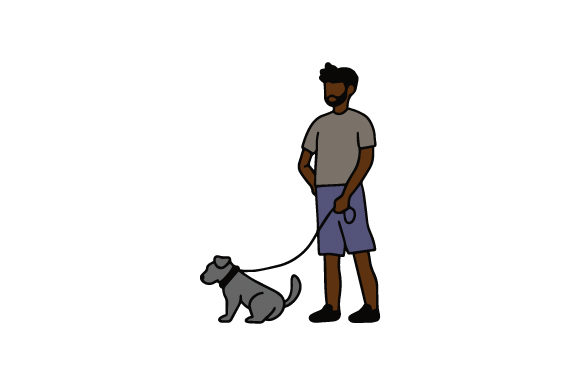
African-American Man Walking the Dog
First Impression: Warm, Grounded, and Instantly Relatable
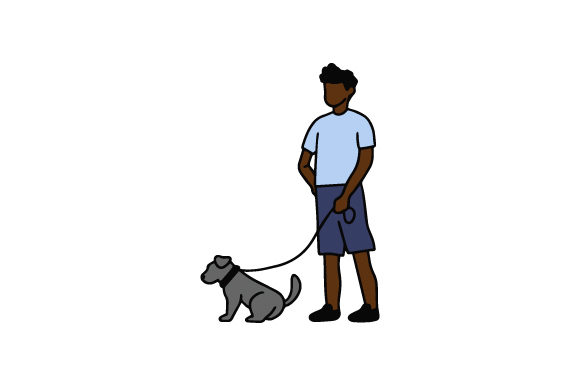
When I opened African-American Man Walking the Dog, I didn’t see just another silhouette or clipart-style figure—I saw a quiet moment of everyday joy. The pose is natural: one foot forward, leash gently taut, dog mid-stride beside him. There’s no exaggerated grin or forced energy—just calm presence. That authenticity matters deeply when you’re stitching something meant to live on a tote bag for school drop-offs, a baby onesie for a new parent, or an apron in a Black-owned café. It feels human first, decorative second.
Where This Design Truly Shines
I tested African-American Man Walking the Dog across three real projects: a medium-weight cotton tote for a neighborhood dog-walking co-op, a soft fleece blanket for a new dad, and a 4” embroidered patch sewn onto a denim jacket. In every case, it held up—not as a “cute” add-on, but as a meaningful visual anchor. On the tote, it landed cleanly at 5.5” wide with balanced negative space around the figures. On the fleece blanket, the clean lines translated well into fill stitch without bleeding or fuzzing. And on the denim jacket patch? The proportions stayed legible even after heat-sealing and top-stitching.
This isn’t a design that screams for attention—it invites recognition. That makes it ideal for small shop products where brand voice leans thoughtful over flashy: boutique nursery decor, personalized holiday gifts for multi-generational families, or custom sweatshirt embroidery for community events. Etsy sellers will find it resonates especially well in listings tagged “inclusive embroidery,” “Black family art,” or “everyday life crafts.” As a machine embroidery design, its strength lies in clarity—not complexity.
Use With Care: Fabric, Fit, and Functionality
African-American Man Walking the Dog performs best on stable, medium-to-heavy fabrics. I wouldn’t recommend it for ultra-thin tees (especially lightweight poly blends) without significant underlay and light-density fill. On stretchy fabric like jersey, the outline holds—but the dog’s ear and man’s shoulder detail softened slightly without proper cutaway stabilizer. Curved surfaces like caps require repositioning the design lower than usual; the vertical balance shifts when hooped on a cap frame, so test-stitch first.
Small hoop sizes (under 4”) demand caution. At 3”, the leash becomes a fragile thread bridge and the dog’s paws risk merging into a single blob. For baby embroidery or tea towel designs, stick to 4.5” or larger unless you’re confident adjusting stitch density manually. Also note: the design includes subtle contouring—not heavy satin stitch, but gentle directional fill that reads beautifully on light fabric but can recede on dark backgrounds unless you boost contrast with thread colors (e.g., charcoal gray thread on navy, or ecru on black).
What You’ll Want to Check Before Stitching
- Stitch density: Moderate—not too sparse, not overly dense. Still, run a test on scrap fabric to confirm your machine handles the transitions between walking stride and leash tension smoothly.
- Hoop size: Works comfortably in 5x7 hoops. If using smaller frames, verify all elements clear the hoop edge—especially the dog’s tail and man’s trailing hand.
- Fabric texture: Avoid highly napped fabrics (like thick terry cloth) unless you’re willing to add extra topping stabilizer—the fine leash line may sink in.
- Thread color pairing: Try it in monochrome first. A single rich thread (navy, forest green, or warm brown) gives cohesion across diverse projects—from kitchen towels to graduation gifts.
- Licensing: Since this embroidery file comes in SVG, PNG, EPS, and DXF formats, double-check usage rights before listing finished products or digital embroidery files for resale. Craft business owners should confirm commercial permissions upfront.
Why It Builds Trust—Not Just Decoration
In my decade reviewing embroidery assets for makers, I’ve seen how representation lands—not as tokenism, but as resonance. When a customer sees African-American Man Walking the Dog on a handmade pillow cover in a local shop, they don’t just register “dog theme.” They see themselves reflected in rhythm, posture, and ordinary grace. That builds trust faster than any marketing copy.
It also elevates perceived value. Unlike generic paw prints or cartoon dogs, this design carries narrative weight. Buyers understand it was chosen intentionally—not dropped in as filler. That intentionality shows in presentation: whether stitched on an organic cotton apron for a soul food pop-up or as a framed patch for a child’s first vet visit, it reads as considered, not canned.
Final Notes for Embroidery Designers & Creative Entrepreneurs
If you’re evaluating African-American Man Walking the Dog for your next craft business launch, Etsy collection, or custom apparel line—start simple. Run it as a printable mockup on a neutral background. Then stitch it on two contrasting fabrics: one light (oatmeal linen), one dark (charcoal twill). Compare both in natural light. Does the man’s stance read confidently? Does the dog feel like a companion—not an accessory?
Also ask: does this support your brand consistency? If your shop celebrates daily rituals, intergenerational connection, or quiet resilience, then yes—this design belongs. If your focus is whimsy, fantasy, or maximalist pattern, it might sit awkwardly unless layered intentionally (e.g., as a focal point amid botanical borders).
Lastly, remember: great embroidery files aren’t just technically sound—they’re emotionally legible. African-American Man Walking the Dog earns its place in real-world use because it stitches cleanly, speaks kindly, and leaves room for the person holding the finished product to feel seen.