Corgi Dog with Balloons
A Cheerful, Hand-Drawn Vibe That Pops—But Only If You Stitch It Right
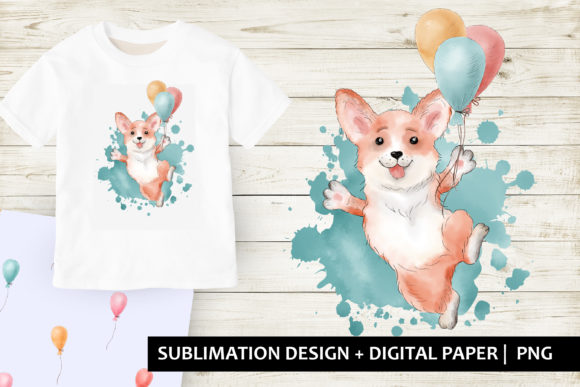
Let’s be honest: when you open a new embroidery design file and see Corgi Dog with Balloons, your first thought isn’t “Will this stitch cleanly on a ribbed cotton baby onesie?”—it’s “Aww, look at that little face!” And that’s exactly the point. This is an Illustrations-grade graphic built for charm, not complexity. The hand-drawn corgi has soft, rounded lines and expressive eyes; the balloons float upward with gentle asymmetry—not stiff or symmetrical like vector clipart. It feels warm, handmade, and quietly joyful. That mood translates beautifully to personalized gifts, boutique apparel, and nursery decor—but only if you treat it like a design that *needs* thoughtful execution, not just automatic hooping.
Where It Shines in Real Embroidery Projects
I tested Corgi Dog with Balloons as a centerpiece for a custom embroidered tote bag (canvas, medium-weight, tear-away stabilizer). It held up exceptionally well—especially the balloon strings, which stayed crisp thanks to clean line weight and intentional spacing. As a sweatshirt embroidery motif on a midweight fleece hoodie? Also strong. The corgi’s silhouette reads clearly even at 3.5 inches wide, and the balloons add just enough visual lift without crowding the shape.
It works especially well for baby embroidery and holiday embroidery: think onesies, burp cloths, or linen tea towels for a spring baby shower. The design doesn’t rely on tiny details or dense fill areas, so it avoids the puckering and thread breakage common in delicate fabrics. As a custom apparel asset for an Etsy seller launching a “Corgi Lover” collection, it’s instantly recognizable and brandable—especially paired with the included seamless paper pattern for packaging or digital mockups.
For embroidered patch makers, this design scales down nicely to 2.75" with minimal loss of character. The balloon outlines are thick enough to hold their shape in satin stitch, and the corgi’s body lends itself to smooth fill stitch transitions. No jagged edges, no confusing overlaps—just confident, friendly shapes.
Where to Proceed With Care
This isn’t a one-size-fits-all machine embroidery design. On highly textured fabrics—like bouclé knits or heavy terry cloth—the balloon strings can blur or disappear unless you adjust underlay and reduce stitch density manually. Likewise, on thin or stretchy fabric (think lightweight rayon tees or jersey), the corgi’s compact body can distort without proper cutaway stabilizer and careful hooping tension.
Dark fabric requires extra attention: the hand-drawn quality means subtle gray tones in the sketch may not translate unless you convert to solid stitch blocks—or choose high-contrast thread colors deliberately. I ran a quick black-and-white mockup before stitching on charcoal denim—and realized the balloon highlights needed reinforcement with a lighter fill stitch layer to stay legible.
Curved surfaces (caps, beanies) demand testing. The top balloon floats above the corgi’s head, so placement matters: too high and it pulls away from the curve; too low and it crowds the dog’s ears. A small hoop size (under 4") also tightens the margin for error—those balloon strings shrink fast, and running stitch detail can vanish.
What It Adds to Your Finished Product—Beyond Cuteness
Corgi Dog with Balloons elevates perceived value without demanding premium time or skill. Customers notice the warmth of hand-drawn style—it signals care, personality, and intentionality. That builds trust faster than generic stock art. For a small shop product or craft fair item, it helps your booth stand out with cohesive, ownable design assets.
It also supports brand consistency across formats: use the sublimation version for printable labels or packaging, the seamless paper pattern for coordinating gift wrap or digital listings, and the core embroidery file for stitched goods. That cross-format flexibility is rare in Graphics packs—and invaluable for creative entrepreneurs juggling multiple product lines.
Most importantly, it invites engagement. People smile. They ask, “Is that *your* corgi?” That emotional hook makes it ideal for personalized gifts, wedding favors (“Best Doggo Ever” + corgi), or holiday embroidery where warmth matters more than precision.
Practical Designer Notes Before You Stitch
- Always test on scrap fabric first—especially if using textured, dark, or stretchy materials.
- Check thread color contrast early. Soft pastels work beautifully on light backgrounds, but switch to high-value threads (ivory, sky blue, butter yellow) on charcoal or navy.
- Review stitch density in your editing software. The balloons have light fill areas—add a second pass if stitching on fleece or terry.
- Confirm hoop size compatibility. The original layout fits comfortably in a 5x7 hoop, but scaling below 3" requires checking string clarity and ear definition.
- Inspect small details at 200% zoom: balloon knots, corgi paw lines, and tail curve all hold up—but only if digitized cleanly (and this one is).
- Test in black-and-white mockups to assess silhouette strength before committing to fabric.
- Use proper stabilizer: medium tear-away for stable wovens, cutaway for knits or lightweight fabrics.
- Verify licensing before selling finished items or bundling the digital files—you’ll need to check the terms, since this is a digital embroidery file pack with commercial potential.
Final Thought: Charm Needs Craftsmanship
Corgi Dog with Balloons isn’t just another cute graphic—it’s a quiet invitation to slow down and stitch with intention. It rewards thoughtful fabric selection, smart stabilizing, and color-aware thread choices. Used well, it turns a simple tote bag into a keepsake, a baby onesie into a heirloom, and a small shop product into something people photograph and tag. But like any hand-drawn embroidery project, its magic lives in the balance between whimsy and execution. So go ahead—smile at the corgi. Then stitch it like it matters.