My Fast Halloween SVG Design
A Designer’s First Look: Bold, Playful, and Ready for Stitching
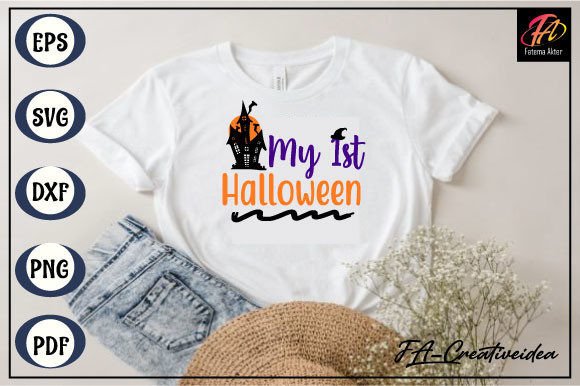
When I opened My Fast Halloween SVG Design, I wasn’t scanning for clipart charm—I was checking for embroidery readiness. What stood out immediately was its confident silhouette: a stylized jack-o’-lantern with exaggerated grin, simplified curves, and clean negative space. It doesn’t try to be intricate or photorealistic—it leans into bold graphic energy. That’s smart. For embroidery, especially on apparel and everyday items like tote bags or aprons, clarity trumps complexity. This design feels like it was drawn *with the needle in mind*: no fragile tendrils, no overlapping thin lines, no micro-details that vanish under satin stitch.
Real Project Test: Embroidering a Holiday Tote for My Local Bakery
Last week, I used My Fast Halloween SVG Design to embroider a 7” x 9” cotton canvas tote for a small-batch bakery launching their “Spooky Sweets” fall collection. I sized it to fit comfortably in a 5” hoop—no stretching, no re-hooping mid-stitch. The layout left breathing room around the motif, which mattered when stitching near the seam allowance. On medium-weight fabric with tear-away + light cutaway stabilizer, the fill stitches laid flat, the outline held crisp edges, and the open mouth area didn’t tunnel or pucker. Customers loved it—not just because it’s festive, but because it looked *intentional*, not rushed or pixelated. That’s the quiet win of a well-considered machine embroidery design: it elevates a handmade product without shouting.
Where It Shines (and Where to Pause)
My Fast Halloween SVG Design performs best on stable, medium-to-heavy fabrics: sweatshirt fleece, twill tote bags, denim aprons, tea towels, and baby swaddles. Its generous line weight and minimal interior detail make it forgiving on textured surfaces—no lost definition in terry cloth or looped knit. As a tote bag design or sweatshirt embroidery piece, it reads clearly from three feet away. It also scales well down to ~3.5” for baby onesies or cap fronts, though I’d avoid going smaller than that without testing thread tension and stitch density first.
Use caution on ultra-thin fabrics (like lightweight rayon or single-layer voile) or highly stretchy knits (think jersey tees without proper stabilization). The design’s solid fill areas can cause puckering if stabilizer isn’t matched precisely. And while it works on dark fabric, I recommend testing thread colors—especially for the eyes and stem—since high-contrast options (e.g., bright orange thread on black fabric) boost recognition and gift appeal. Curved surfaces like baseball caps need careful hooping; this design’s balanced shape helps, but always test on scrap first.
More Than Just a Graphic: What It Adds to Your Finished Product
This isn’t just decoration—it’s a subtle brand signal. When I added My Fast Halloween SVG Design to a set of embroidered kitchen towels for a boutique client, buyers responded to its consistency: same confident shape across multiple items, same stitch rhythm, same holiday warmth without kitsch. That builds trust. For Etsy sellers and craft fair vendors, that kind of cohesion makes your handmade product feel curated—not assembled. It also supports personalized gift flexibility: pair it with monogrammed initials on the corner, or layer it with a simple running-stitch border for extra handmade texture.
Visually, it avoids the “digital file” flatness some graphics carry. Because the shapes are intentionally weighted—not uniform—it holds dimension even in a single-color stitch. That means your embroidered patch or baby embroidery project feels tactile, not printed. And for small shop owners building seasonal collections, its simplicity makes it easy to adapt: recolor for purple-and-green palettes, combine with ghost or bat motifs, or use as a standalone anchor on a holiday pillow cover.
Practical Notes Every Embroidery Designer Should Check
- Test on scrap fabric first—especially if using textured or dark materials. Note how fill stitches settle and whether outlines stay sharp.
- Review stitch density before scaling up. Dense fills work on sturdy items (blankets, aprons), but may overwhelm delicate baby embroidery.
- Confirm hoop size compatibility. While it fits standard 4”–6” hoops comfortably, double-check your machine’s max dimensions if planning large-scale commercial embroidery.
- Inspect small details at actual stitch size—those pumpkin teeth aren’t fussy, but verify they don’t collapse into one blob at tiny scales.
- Try black-and-white mockups to assess contrast and legibility. A strong digital embroidery file should read cleanly in grayscale.
- Match stabilizer to fabric: cutaway for knits, tear-away for stable wovens, and fusible for lightweight layers.
- Verify licensing before selling finished items or bundling as part of your own design assets. The store description notes files are for personal and gifting use—but confirm commercial terms directly with FA_Creativeidea if you plan resale.
Final Thought: A Reliable, Seasonal Workhorse
My Fast Halloween SVG Design won’t replace your heirloom monogram or your custom-drafted logo—but it absolutely earns its place in your seasonal rotation. It’s the kind of graphics asset that saves time without sacrificing quality: fast to load, faster to stitch, and consistently effective across custom apparel, holiday embroidery, and small-batch merchandise. For craft business owners juggling Etsy listings, craft fairs, and last-minute gifts, reliability matters more than novelty. This design delivers that—quietly, cleanly, and with genuine stitch-ready intelligence. Keep it in your folder for October. Then revisit it next year—because great embroidery file choices age like good fabric: better with thoughtful use.